
Rebar vs. Reinforcing Bar vs. Reinforcement Mesh: What's the Difference?
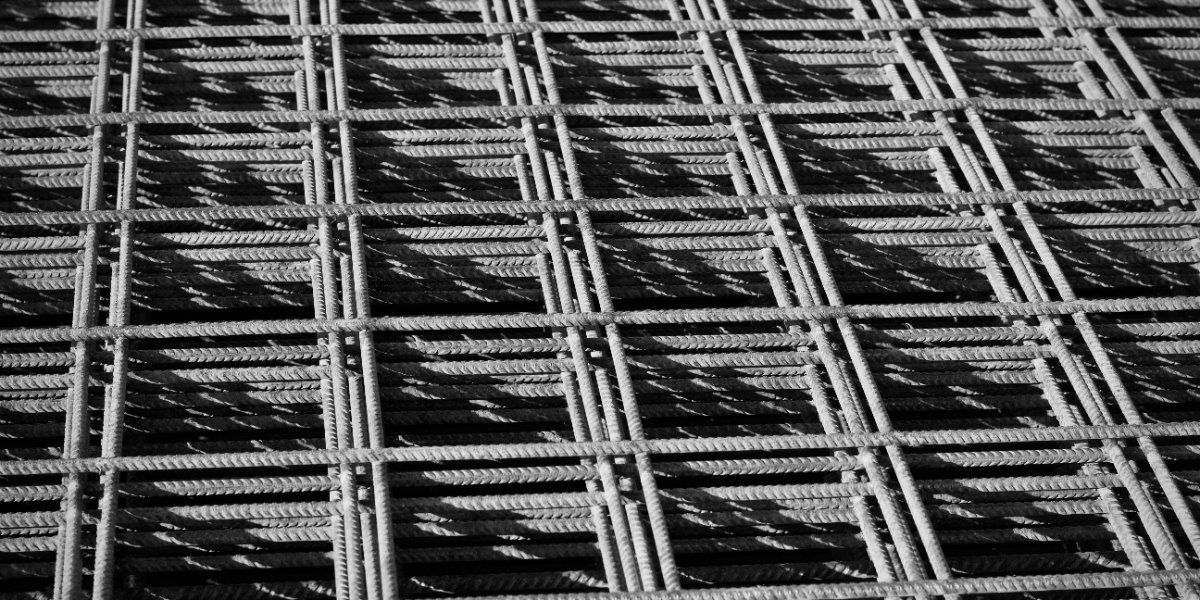
"Rebar," "reinforcing bar" and "reinforcement mesh" get used almost interchangeably in everyday conversation, but they don't all mean the same thing. If you're specifying, ordering, or just trying to understand a drawing, it's worth knowing exactly what each term refers to — because rebar and mesh aren't just two names for the same product, they're genuinely different forms of reinforcement suited to different jobs.
Rebar
Short for "reinforcing bar." An individual steel bar, ribbed for grip, supplied straight or cut and bent to shape, and tied or fixed on site into a cage or grid before concrete is poured.
Reinforcing bar
The full, formal name for the same product as rebar. You'll see "reinforcing bar" on specifications and standards documents, and "rebar" used informally on site — they refer to the same thing.
Reinforcement mesh
A factory-welded grid of thinner steel wires, supplied as flat sheets or rolls, providing reinforcement across an area without needing individual bars tied by hand on site.
Rebar and reinforcing bar: the same thing, two names
There's no technical difference between rebar and reinforcing bar — "rebar" is simply the common contraction used day-to-day, while "reinforcing bar" (or "reinforced bars," which usually just refers to the same product in plural) is the fuller term you'll see in specifications, standards and formal drawings. Both describe the same ribbed steel bar, supplied in standard diameters (commonly 8mm to 32mm) and cut or bent to the shapes set out in a bar bending schedule.
Reinforcement mesh: a genuinely different product
Reinforcement mesh (also called rebar mesh, steel mesh, or concrete mesh) is different in kind, not just in name. Rather than individual bars cut, bent and tied together on site, mesh arrives as a pre-welded grid — a flat sheet or roll with wires already spaced and welded at every intersection. That makes it fast to lay across a large flat area, but it isn't a substitute for rebar everywhere: mesh sheets come in a limited range of standard grid spacings and wire sizes, so where a design needs a specific bar size, spacing, or shape that doesn't match a standard mesh sheet, individually placed rebar is used instead. For a closer look at mesh sizes and where mesh is typically used, see our guide to reinforcing mesh.
Which one does your project need?
| Situation | Typical choice |
|---|---|
| Beams, columns, footings | Individually placed and bent rebar, scheduled per a BBS |
| Heavily loaded or structural slabs | Rebar, often with mesh for secondary/shrinkage reinforcement |
| Ground slabs, driveways, pavements | Reinforcement mesh, laid in sheets or rolls |
| Any shape requiring bends or hooks | Rebar — mesh is flat and can't be bent to a shape code |
In practice, many structures use both: rebar for the primary structural members, and mesh for secondary reinforcement in slabs or paving. What matters is matching the reinforcement type to what the structural design actually calls for on the drawing.
Scheduling rebar for your project?
Once you know you need individually bent bars, use the calculator to turn shape codes and dimensions into a complete, exportable schedule.
Open the BS 8666 calculator →Frequently asked questions
Is rebar the same as reinforcing bar?
Yes. Rebar is simply the common short name for reinforcing bar — the same steel bar, just two different ways of saying it. Reinforcing bar and reinforced bars are used more in formal specifications and drawings, while rebar is the everyday term used on site.
Is reinforcement mesh the same as rebar?
No. Rebar refers to individual steel bars, usually tied together on site into a cage or grid. Reinforcement mesh is a factory-welded grid of smaller wires, supplied as flat sheets or rolls, used where a uniform grid of reinforcement is needed rather than individually placed and tied bars.
When would a project use mesh instead of rebar?
Mesh is common in ground slabs, driveways, pavements and other flat areas where a consistent grid of reinforcement is needed with minimal site labour, while individually placed rebar is used where bars need specific shapes, positions or bar sizes that a standard mesh sheet doesn't provide, such as beams, columns and heavily loaded slabs.
Always follow the structural design drawing for the specific reinforcement type, size and spacing required — this guide is a general explainer, not a substitute for the project's design documentation.